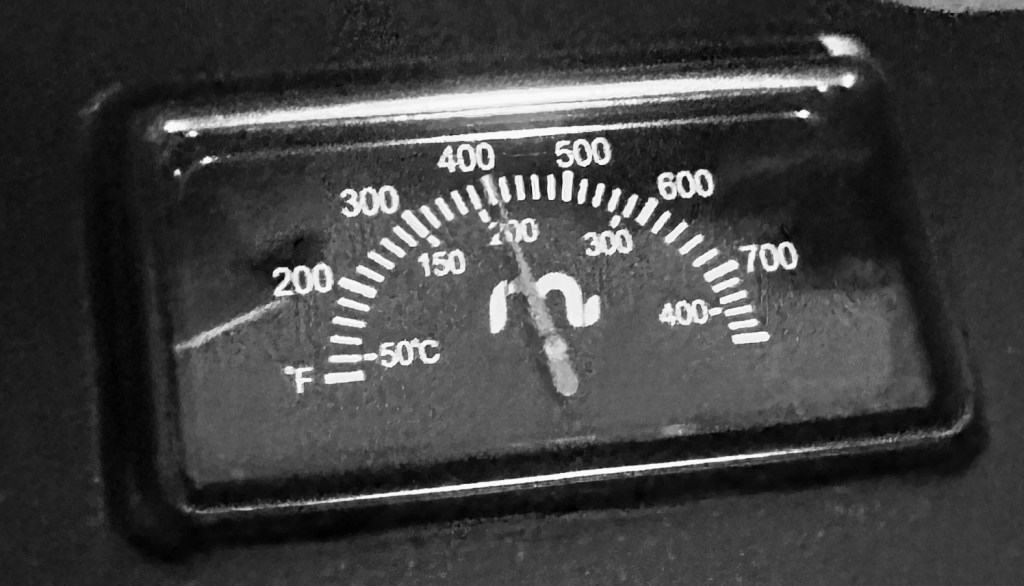

Posts on the theme of learning new things seem to keep writing themselves. This past week has been spent on an entirely unwanted education in gas—not the sort that fuels a car, and thankfully nothing gastric, but butane gas.
It all started several months ago when we decided to part with a very old BBQ in favour of a pizza oven. There was some logic to this decision: I seemed to use the BBQ almost exclusively with a pizza stone for homemade pizzas anyway. While I’ve written before about traditional boy/girl jobs, grill chef is one area where we completely buck the trend. Toiling over hot coals—or, more accurately, gas—is firmly my remit. I am quite happy with a griddle pan, but it’s far preferable to keep the sizzle of steaks outdoors than spend an evening burning through Jo Malone candles to restore a pleasant aroma indoors.
A small BBQ was duly procured, followed by a trip to the speciality butcher. Being geographically close to South Africa, the braai reigns supreme here (apologies to my Australian and American readers; which nation truly rules the grill is a debate for another day). Both the BBQ and the meat were South African, as were the very helpful salespeople.
On the first evening, after 45 minutes running at full heat, all we had to show for our efforts was undercooked chicken and vegetables that we less than al dente. A quick transfer to my trusty wok saved dinner, but the disappointment was palpable.
What followed was a pantomime involving regulators, hoses and three separate trips back to the BBQ supplier. Every time the unit was tested at the shop it happily exceeded 350°C. At home, however, I struggled to reach 200°C. The second and third attempts produced even less excitement: no sizzle, no sear and yet another retreat to indoor cooking.
By Sunday it was a relief to be invited out for dinner. Inevitably, with several South Africans among the guests, conversation turned to the cursed BBQ. The rather bizarre dinner-party troubleshooting session produced a theory that the problem lay in the fact that I had a red gas bottle at home, whereas testing at the shop had been done with a blue one.
This is where the education began.
Thanks to Keith’s skill in asking ChatGPT the right questions, I learned that there is absolutely no difference between red and blue gas bottles beyond supplier branding. They may require different regulators, but the gas itself is the same. I also discovered that butane and propane are remarkably similar, although propane performs better in colder temperatures. Who knew?
Monday morning arrived and I fired the BBQ up one last time. This time I took photographs of both my watch and the temperature gauge to prove to the very helpful—but increasingly sceptical—shop staff that the thing genuinely did not work at home. This time, trip number four, we took our gas bottle and regulator with us. During testing, the BBQ only generated proper heat when the bottle valve was partially open.
Hallelujah.
A faulty valve was causing the problem all along. Why this same valve had apparently allowed the pizza oven to function perfectly remains a mystery, but by that point I was past caring. I finally had an answer.
A new red bottle was purchased after visiting three petrol stations to find one in stock. Full of renewed confidence, I set about cooking some expensive fillet steaks. Side dishes were prepared, the BBQ was lit, and victory in the contest of “woman V braai” seemed assured.
Maximum temperature: 200°C – again!
I very nearly wept.
My husband was ready to return the whole thing and abandon the project entirely, and I couldn’t say I disagreed.
Then came one final attempt. I turned the gas off and back on. That’s what you’re supposed to do when something doesn’t work, isn’t it? Ask any IT person.
The valve was stiff. I didn’t want to destroy my manicure, my husband had completely washed his hands of the saga, and so I could only manage to open it halfway. Guess what? It worked perfectly. Within minutes the BBQ hit 350°C and shortly afterwards we were enjoying delicious medium-rare steaks.
The lesson, it seems, is that half on works better than full on.
Less is more, after all.


Please share your thoughts and experiences.